


US Midterm Elections: What the Market Really Votes For
On 3 November, the United States elects a new House of Representatives and roughly one third of the Senate. On Wall Street, a remarkably reliable rule applies: after midterm elections, share prices rise, no matter who wins. Since 1950 this has been the case without exception. Politically, five of the last six midterms also changed the balance of power in Congress.

Since 1950, the S&P 500 has been higher twelve months after each of the 19 midterm elections, by around 15% on average. A study in the Journal of Financial Economics covering 145 years shows that in the five months from December to April following a midterm election, US equities delivered an excess return over money market rates of 15.4% annualised, compared with 3% in all other months (see chart). Whether the president’s party won or lost made no difference. One explanation for the strong gains lies in psychology: midterm elections create uncertainty because they determine the president’s ability to govern effectively. Ahead of the election, money tends to flow out of equities and into money market funds, only to return afterwards. The market rewards investors for enduring uncertainty — not for betting on a particular election outcome.
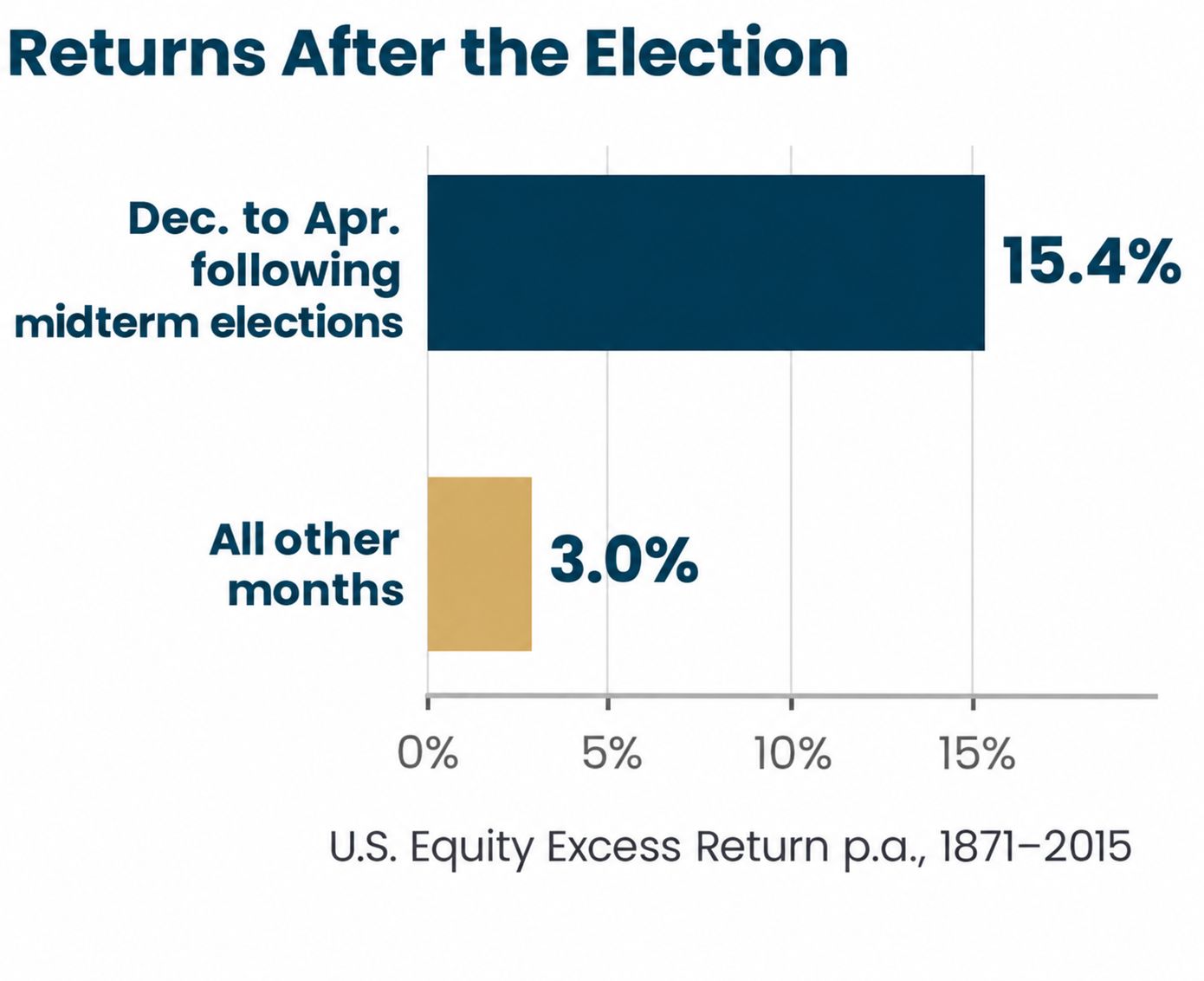
Fig. 1: Excess return of US equities over money market rates, annualised, 1871 to 2015 (Source: Chan & Marsh, Journal of Financial Economics, 2021).
The Lame Duck as a Support
But why, of all things, can a loss of presidential power reassure markets? Because it turns the president into a “Lame Duck“. If his party loses its majority in one chamber, the scope for major legislation narrows. Surprises on taxes, spending or regulation become less likely, and the remainder of the term becomes more predictable. Political uncertainty does not disappear, but it tends to decline. Notably, two of the longest bull markets of the past 30 years fell into such phases: Clinton after 1994 and Obama after 2010, both facing a Republican- controlled House and with less room for sweeping initiatives.
Congress Is Hardly a Risk Factor Any More
The lame-duck logic assumes that a president needs Congress to push through his agenda. Donald Trump, however, barely needs the legislature. Since deep polarisation has largely paralysed the political process in the US, presidents have increasingly governed by so-called “Executive Orders“: presidential directives with the force of law, issued to federal agencies. They are a central tool for bypassing Congress when legislative majorities are lacking or swift action is required. In 2025 alone, Trump signed 225 Executive Orders, more than Biden in four years, and this despite holding his own majority. Market-relevant policy regularly circumvents Congress. A Democrat-controlled Congress can launch investigations and block budgets, but it can often only stop decrees with a veto-proof majority. Today, the real counterweight to the executive sits not on Capitol Hill but in the courts: it was there, for instance, that the tariffs and the end of birthright citizenship were halted.
This Time Could Be Different
On top of this comes a source of uncertainty without historical precedent: following the controversies surrounding the 2020 presidential election, the midterms will take place without OSCE election observation for the first time since 2002. A prolonged dispute over the result is not reflected in the historical patterns. How sensitively markets can react to political uncertainty was already evident in the 2000 presidential election, with the weeks-long standoff between George W. Bush and Al Gore. Political risk, which usually recedes once the elections are over, could therefore persist for longer this time.
Conclusion
Midterm elections traditionally bring greater political clarity and thereby remove part of the uncertainty in the markets, a pattern observed over many decades. For investors, this argues for staying invested: the post-election rally has so far survived every constellation. This time, however, the effect could be weaker, as Congress’s political room for manoeuvre is limited in key areas. At the same time, there is additional uncertainty about an orderly election process and the acceptance of the result. A possible challenge to, or nonrecognition of, the outcome by the president would be uncharted territory, and could put the historical stock market rule to the test this time.
News 3 & Know-How 8

27.08.2026
12th Anniversary of the FC Lucerne Golf Trophy
For the twelfth time in a row, Valterna AG was able to support the FC Lucerne Golf Trophy in Engelberg as the main sponsor.

06.07.2026
Illusion of Diversification
Index funds and ETFs have democratised investing. With a single, low-cost investment vehicle, investors can gain exposure to an entire...

04.05.2026
Setting sail for new shores in Lucerne!
We are delighted to announce that Valterna AG will be relocating its headquarters to Lucerne. After careful strategic consideration, we...